
Why To-Do Lists Fail (and What to Use Instead)
Traditional to-do lists can increase stress, timeline based planning creates clarity and calm.
4/23/20251 min read
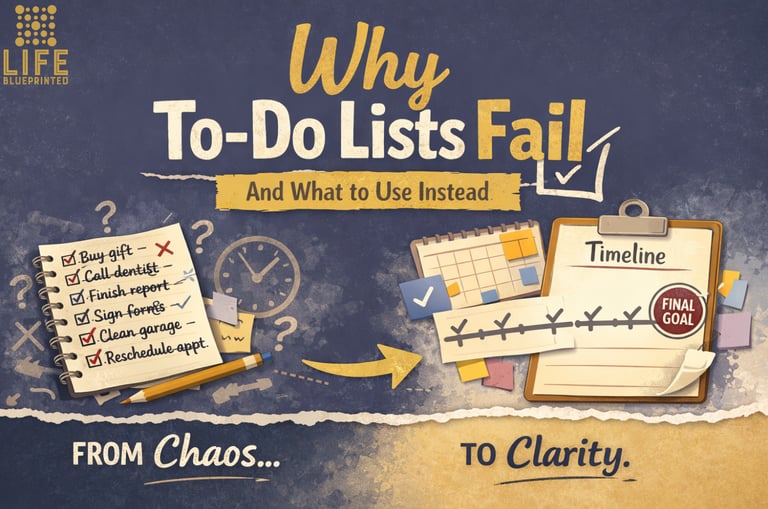
If to-do lists worked the way we hoped, we’d all feel calm by now.
Instead, most lists become a running record of what didn’t get done — rewritten, reshuffled, and carried from one week to the next. The problem isn’t willpower. It’s that to-do lists are designed for tasks, not time.
Life doesn’t unfold as a flat list. It unfolds in sequences.
A dentist appointment isn’t just “schedule dentist.” It’s noticing insurance timelines, school absences, work coverage, follow-ups, and reminders months apart. When everything lives on one list, urgency wins — not importance.
That’s why to-do lists fail: they ask you to decide what matters most every single day.
What works better is a timeline.
When tasks are placed where they belong — weeks or months ahead — decisions disappear. You don’t have to remember to plan a birthday party when the date arrives because the planning already happened long before it felt urgent.
Lists ask you to react.
Timelines let you prepare.
And preparation is what reduces mental load.